A Cleaner Bedroom for Less Stress and Better Sleep
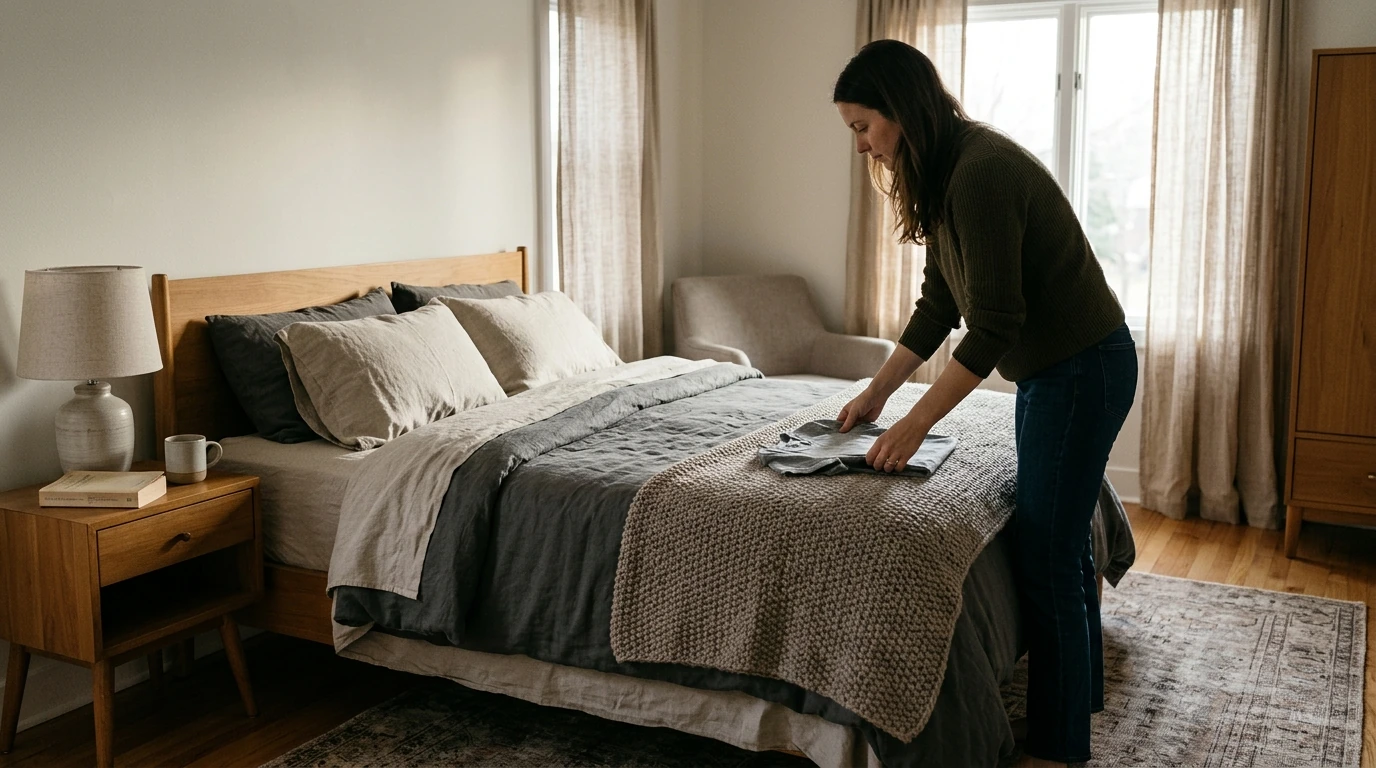
A calmer bedroom can begin with a few small changes. Clearing a surface, putting clothes away, or taking a quiet moment before bed can make your space feel more welcoming. You don’t need a perfect room or a complicated routine to get started.
Our digital eBook, How a Clean Bedroom Can Melt Away Stress, focuses on decluttering, mindfulness, and better sleep. Alongside the guide, the ideas below can help you choose a manageable starting point and build habits that fit your life.
Give Your Bedroom Room to Breathe
When a bedroom is crowded with laundry, papers, and items waiting to be put away, the visual clutter can make the room feel busy. A clearer space may feel more relaxing, especially when you’re trying to shift from the demands of the day to a quieter evening.
That doesn’t mean every surface needs to be bare. The book you’re reading, a favorite photograph, or a cozy blanket can make the room feel like yours. Aim for a space that feels comfortable and usable, rather than one that looks perfectly styled.
Our team recommends starting with the things that bother you most. If you have to move a pile before getting into bed, for example, clearing that spot may make a more noticeable difference than organizing a drawer you rarely open.
Start With a Gentle Bedroom Reset
Pick one manageable area: a bedside table, a corner of the floor, or the top of a dresser. Give yourself a short window of time, or simply work until that one area is done. A small finish can feel more encouraging than pulling everything out and running out of energy halfway through.
As you sort, use four simple groups: items to keep in the bedroom, items to move elsewhere, items to donate, and items to discard. Put away what you can immediately, and gather the rest so it doesn’t drift back onto the surface you just cleared.
A Simple Bedroom Reset
| Area | Small action | Potential benefit |
|---|---|---|
| Bedside table | Put away items that do not belong there | A less crowded surface |
| Floor | Place clothes in a hamper or return them to storage | A clearer path |
| Bed | Straighten bedding and remove unrelated items | A more inviting place to rest |
Once your chosen task is complete, stop if you want to. There’s no need to turn a bedside-table reset into a whole-room overhaul. You can return to another area when you have the time and energy.
Make Tidying a Mindful Practice
Tidying can be a chance to slow down rather than another task to rush through. Notice how the room feels before you begin, then focus on one action at a time: folding a shirt, putting a book away, or clearing a path to the bed.
Between tasks, pause and take a few comfortable breaths. You might notice that you’re ready to continue, or that you’ve done enough for now. Either response is useful information.
We encourage you to treat this routine as support, not as a cure for stress or a test of discipline. Some days will be easier than others, and leaving a task for tomorrow is not a failure. The National Institutes of Health’s introduction to mindfulness offers more context on bringing attention to the present moment.
Create a Space That Supports Better Sleep
An uncluttered sleep area can be one part of a calming bedtime routine. When your bed is easy to reach and your essentials have a place, settling in may feel less distracting. Still, a tidy room alone cannot guarantee better sleep; stress, schedules, health, and many other factors can affect how well you rest.
Consider a few adjustments that feel practical for you. Dim the lights as bedtime approaches, keep the room comfortably cool, and reduce noise where possible. You could also set aside a few minutes to put away anything on the bed before you start winding down.
The CDC’s sleep guidance describes habits that can support healthy sleep. If sleep difficulties persist or interfere with your daily life, consider talking with a healthcare professional.
Keep the Calm Going
A brief daily reset can keep small piles from becoming larger projects. Try putting clothes in the hamper, returning a glass to the kitchen, and clearing enough space on your bedside table for the things you use at night. Even a couple of minutes can give you a useful stopping point.
Occasionally, look at what tends to collect in your bedroom. If mail keeps landing on the dresser, a designated spot elsewhere may help. If clean clothes gather on a chair, making a little more room in a drawer could make putting them away easier. Choose changes that solve a real inconvenience rather than adding rules you won’t want to maintain.
For more support around decluttering, mindfulness, and better sleep, explore our How a Clean Bedroom Can Melt Away Stress digital guide, available for $12.99 USD.
If organizing your finances is another goal on your mind, our Mastering Your $100K Salary digital budgeting guide is a separate resource focused on budgeting and saving. You can choose the guide that fits your current priority without taking on everything at once.
FAQ
Can a clean bedroom reduce stress?
A tidier bedroom may feel calmer and reduce visual distractions for some people, but it is not a guaranteed treatment for stress.
Where should I start decluttering my bedroom?
Choose one small area, such as a bedside table, and sort only what you can manage in a short session.
Can decluttering help me sleep better?
A comfortable, uncluttered bedroom may support a relaxing bedtime routine, though sleep is influenced by many factors.












Leave a comment