Is It Okay to Crate a Dog Every Night? Safety Tips
Is it okay to crate a dog every night?
Yes, many dogs can be crated every night if they are comfortable in the crate, have had their needs met, and are not confined for too long overall. Nightly crating is not a requirement, though. The right routine depends on your dog’s age, health, behavior, and ability to relax in the crate.
A crate should be a safe, positive space—not a place your dog is forced to endure. If your dog regularly panics, tries to escape, or cannot settle, address the cause rather than continuing the same routine.
How long can a dog stay in a crate overnight?
Many healthy adult dogs can remain in a crate for a typical night after a final bathroom break. Puppies usually need more frequent breaks, and senior dogs or dogs with medical conditions may need them more often, too. Your dog’s veterinarian can help you plan around individual needs.
Consider the entire day, not just the nighttime stretch. A dog who spends much of the day crated may need more time outside the crate for exercise, social interaction, and enrichment. Our team recommends planning those opportunities before making nightly crating part of your routine.
What makes a crate appropriate for nightly use?
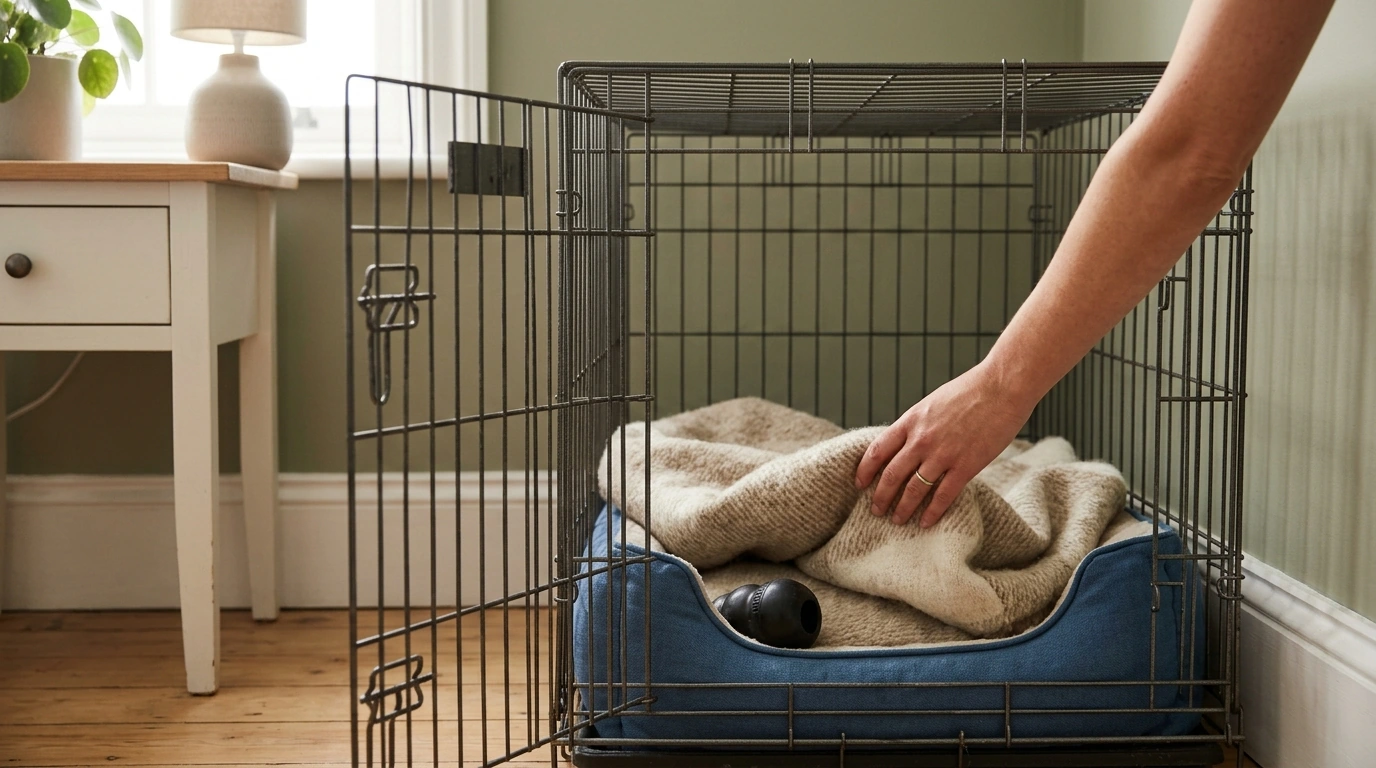
Choose a sturdy, well-ventilated crate that lets your dog stand up, turn around, and lie down naturally. Make sure the door and latch work securely, and remove collars, harnesses, and other items that could catch on the crate. Inspect it regularly for damaged parts or sharp edges.
Introduce the crate gradually, using treats and short, positive sessions. Give your dog a bathroom opportunity before crating and again when you let them out. Never use the crate as punishment, and avoid leaving a dog confined beyond their ability to stay comfortable and clean.
When should you change the routine?
Persistent barking, heavy panting, drooling, frantic escape attempts, or repeated accidents can signal that your dog needs a different approach. Rule out medical issues with your veterinarian, and consider working with a qualified, reward-based trainer if your dog shows distress.
For step-by-step help introducing a crate, see our dog crate training guide for puppies and adult dogs.
FAQ
Should you use a dog crate as punishment?
No. Using a crate for punishment can create negative associations and make your dog reluctant or distressed when entering it.











Leave a comment